News & Views Saturday, May 25, 2013

Category: Composers

Happy Birthday, Peter Ilyich Tchaikovsky! May 7, 1840 07 May, 2013

The Seasons, Opus 37b

This collection of twelve pieces, one for each month, came about because of a commission from N. M. Bernard, editor of the St Petersburg music magazine, Nuvellist. Each month  during 1876,   Tchaikovsky wrote a short piano piece portraying subjects  and activities typical of that month, and it was published in that month’s edition of Nuvellis.  The result is this lovely collection of character pieces.  “Troika”, written for the month of November, stands on its own. It is bright and bouncy, like riding in a troika being drawn by fast horses.  It was a favorite encore of Sergei Rachmaninoff.    “Barcarolle“, written for June, is so pretty that it has been arranged for flute, violin, viola, string bass, and orchestra.  Written on an intermediate to advanced level, this entire work is considered standard literature for today’s pianists. For more information about this collection of sheet music or other collections of piano music, please contact us at 1-800-42-MUSIC, email us at keyboard@stantons.com, or visit our website at http://www.stantons.com.   Shop Stanton’s for all your sheet music needs.

Wolfgang’s “Wunderkind” Sonatas 01 May, 2013

Young Wolfgang A. Mozart was already composing keyboard music by the age of seven.  The Sonatas Vol. 1 (Wunderkind) were published by the end of February 1764 in Salzburg, when Wolfgang was eight years old.  Four sonatas were included: KV 6 and 7,  (called Opus 1 by the publisher) and KV 8 and 9, (called Opus 2 by the publisher).  The Sonatas Vol. 2 contains “The London Sonatas”, KV. 10-15, published as “Opus 3″  in March of 1765.  Sonatas Vol. 3 contains KV 26-31, written while the family was in The Hague, published in April of 1766 as “Opus 4″.  Note: “Wunderkind” means “wonder child”,  apt for a child prodigy!   These collections are on an early intermediate to intermediate level. The early sonatas are delightful to play.  It is interesting to note the progress of young Mozart’s maturity from Sonatas Vol. 1 to Sonatas Vol. 3.  Any one of these collections is a worthy addition to a pianist’s library.  If you would like to know more about these collections or other piano solo music, please contact us at 1-800-42-MUSIC, email us at keyboard@stantons.com, or visit our website, www.stantons.com. Shop Stanton’s for all your sheet music needs!

The Music of James Reese Europe 19 April, 2013

James Reese Europe 00110581was born in Mobile, Alabama in 1880.  Although he only lived to age 39, he became an accomplished orchestra conductor, band leader, and a successful composer of popular songs, marches, and dance music.  He was a key figure in the evolution of orchestral ragtime into jazz.  Some of Europe’s works are still performed today by ragtime pianists and military bands.  Following a concert at Carnegie Hall on March 11, 1914,  the New York “Evening Post” described Europe as “one of the most remarkable of men, not only of his race, but in the music world of this country.”

James Reese Europe was an effective champion of African-American musicians and performers in all idioms, and helped to gain acceptance for them in the USA and abroad.  This collection of sheet music, “The Music of James Reese Europe“, is important because the works within it show Europe’s skill, imagination and versatility in his composing.  It is a valuable resource for early pop, ragtime and dance music. For more information about this or other collections of music, please contact us at 1-800-42-MUSIC, email us at keyboard@stantons.com, or visit our website at www.stantons.com. Shop Stanton’s for all your sheet music needs!

Stanton’s August Church Clinic 27 March, 2013

After Holy Week is done and you’ve had time to take a breath, make sure you’re ready for the next church season with our August Sacred Choral Reading Session!

Stanton’s is pleased to welcome back Mary McDonald as our clinician for the August Church Choral Music reading session! Mary McDonald’s music and talents have blessed choirs and congregations across the country for nearly thirty years.
Mary is a well-known composer of more than 700 choral anthems, many seasonal cantatas, and keyboard collections. She previously served as a sacred music editor for a major publishing company and continues to serve in editorial consultant role for The Lorenz Corporation in Dayton, Ohio. She is published with every major publisher of church music and has had numerous top-selling anthems. Her unique blend of heart, hands, and humor, combined with a wide range of writing and performing styles, keep her in constant demand as a keyboard artist and keyboard and choral clinician.
McDonald_Mary_RGBOne of Mary’s greatest joys has been serving as accompanist for the Tennessee Men’s Chorale since 1985. In 2000, Mary served as the first woman President of the Southern Baptist Church Music Conference. She was recent recipient of second-place in the John Ness Beck Foundation composition award and is a member of the American Guild of Organists (AGO) and the American Society of Composers, Authors and Publishers (ASCAP).

Your registration includes a packet of over 40 new choral anthems that are hand-picked from the hundreds published each year. We look forward to seeing you on August 10th for a wonderful morning of singing with one of the nation’s most sought after church music experts.

Sacred Choral Reading Session
Saturday 8/10/2013, 9:00 am-12:30 pm
Battelle Fine Arts Center, Otterbein University
195 West Park St., Westerville OH 43081
Cost: $20.00 (There is no pre-registration; you may register the day of the clinic beginning at 8:30.)
email our choral department for more details

Sacred Piano Reading Session
- Also featuring Mary McDonald
Saturday 8/10/2013, 2:00 pm-4:30 pm
Stanton’s Sheet Music,
330 South 4th St., Columbus OH 43215
Cost: Free!
email our keyboard department for more details

Shop Stanton’s for all your sheet music needs!

Women Composers for Piano 06 March, 2013

 ”Women Composers in History” is a collection of piano works by women who were, and sometimes still are, influential in the world of piano music.  There are more female composers of piano music than we may think.  This collection of piano pieces presents works by eight women composers, all born in the nineteenth century.  All of the women began piano lessons at around four years of age, and began composing at a young age, between four and nine years old. All these women continued to be active in music for a lifetime. Fanny Mendelssohn wrote her own wedding music the night she was engaged.  Amy Beach had to wait until she was a widow before she could pursue her music career on a public level. Clara Schumann held the position of principal piano teacher of the Frankfurt Hochschen Conservatory from 1878-1892. Teresa Carreno 00103146played for Abraham Lincoln at the White House when she was only ten years old.  She went on to become a piano teacher, and  Edward MacDowell was one of her students.  A one paragraph biography is given for each composer.  As you read these short biographies, it will amaze you how intertwined the lives of the pianists and composers were.

From the Classics: Great Arrangements for HS Band 19 February, 2013

As we mentioned in our recent post, Introduce Your Young Band to Classical Literature, classical arrangements and transcriptions are generally overlooked in favor of standard marches, required adjudication selections, and the overwhelming number of excellent original works for band.  While each of these components is an integral part of modern band programs and concert programming, excellent new arrangements from the classical/orchestral repertoire are also released each year.  In addition to adding more variety to your concert programming, these arrangements expose your students to different stylistic periods of playing and composition, and round out their music education.

This year’s selections range from the operatic (Triumphal March from Aida) to the programmatic (Finale from Carnival of the Animals), and the impressionism of Debussy to the American expansiveness of Copland.  More fantastic classical arrangements and transcriptions can be found by visiting the From the Classics link in the High School section of our Listening Library.

Grade 3
The Promise of Living
Aaron Copland, arr. James Curnow
James Curnow has skillfully adapted this Copland classic for younger players while maintaining its characteristic voicings and transparency.  Its simple, legato, elegant opening in the woodwinds gives way to flowing triplet lines and syncopations as it gradually builds to a full climax.  This moving work is a great introduction to Copland for your students and a breath of fresh air for your audience!

Reverie
Claude Debussy, arr. Erik Morales
The ethereal quality of French impressionist Claude Debussy is beautifully captured in this lyrical transcription that lets your woodwinds take center stage. From plaintive to powerful, the orchestration and melodic lines often make the music sound like an epic film score.

Grade 4
Marche Turque/In the Village
Modeste Moussorgsky, arr. Mayhew Lake/Alex Hilliard
This 1938 publication has been updated for the modern concert band utilizing most of Mayhew Lake’s original scoring, but eliminating uncommon instruments.  Stylistic variety abounds from its different march style with plenty of articulation work (trumpets), to its Middle Eastern modality and ambling tempo, and Lake’s scoring uses the wind band instrumentation to full effect.

Finale from Symphony #2 Excerpts
Jean Sibelius, arr. Larry Daehn
Sibelius’ famous “Symphony for Finland’s Struggle for Freedom” expertly arranged for concert band by Larry Daehn. It’s all here – the heroic “Big Tunes” with radiant trumpets, sonorous horns, the threatening rhythmic motif from the trombones, and the incessant foreboding ostinato.

Grade 4.5 – 5
Triumphal March from Aida
Giuseppe Verdi, arr. Douglas A. Richard
While there have been many triumphal marches written by great composers, few are as well-known as this powerful and exuberant march from Act II of Giuseppe Verdi’s 1871 grand opera, Aida. This arrangement is orchestrated to showcase the richness and capabilities of the contemporary wind band and is based on the early 20th Century setting by the famous Italian bandmaster and composer Giuseppe Creatore.

Carnival of the Animals Finale
Camille Saint-Saens, arr. Larry Daehn
This wildly hilarious classic for eleven players comes to life in this new setting for concert band or wind ensemble, arranged by Larry Daehn. Not for the timid – but if you have ‘animals’ in your band (two mallet virtuosi and wind players who get around fast and easily in the key of C) then this piece is for you.  A perfect selection for encore programming!

Introduce Your Young Band to Classical Literature 12 February, 2013

Are you looking to add more variety to your concert program?  Why not work up an arrangement from the classical/orchestral repertoire?  Let’s face it, classical arrangements often get lost in the shuffle of standard marches, required adjudication selections, and the overwhelming amount of excellent original works for band, but are a great way to vary your programming, expose your students to different stylistic periods of playing and composition, and round out their music education.

There are a number of really good, new classical arrangements for beginning to intermediate level concert bands ranging from the beautiful simplicity of J.S. Bach’s Jesu, Joy of Man’s Desiring to Moussorgsky’s haunting The Old Castle, from the staple of American classical music Grand Canyon Suite to the lushness of Tchaikovsky’s Swan Lake ballet, and the fun of featuring your low brass on Saint-Saens’ Elephants and your trumpet section on the familiar themes in Trumpets of Symphony Hall.

For more great classical arrangements head over to our Concert Band Listening Library and click on the From the Classics links under each category!

Elephants (from Carnival of the Animals)
Camille Saint-Saens/arr. Matt Conaway
Grade 1.5
Bring those low voices into the spotlight! In this setting from Saint-Saens’ Carnival of the Animals, Matt Conaway has created an accessible and audience-friendly feature for those oft-forgotten basses in the back that is also a fun choice for recruiting performances!

Themes from Grand Canyon Suite
Ferde Grofe/arr. Douglas E. Wagner
Grade 2
Too good to pass up! Introduce your students to this staple of American classical music with this true-to-the-original arrangement by Douglas Wagner. Beautiful and loaded with instrumental color and texture, this work features 4 of the 5 movements (Sunrise, On the Trail, Sunset, and Cloudburst), with plenty of musical and style contrast, and also provides a built in social studies lesson.

Jesu, Joy of Man’s Desiring
J.S. Bach/arr. Samuel R. Hazo
Grade 2
Perfect as a warm-up, pre-performance contest selection, or lyrical offering, Samuel Hazo has created an accessible arrangement of this Bach classic by moving the time signature into 3/4 and writing the rhythmic motion as quarter notes. Warm and buoyant, the legato, flowing nature of this work is perfect for getting air moving, and the rolling quarter note rhythms warm up the fingers without many tonguing concerns.

The Old Castle (from Pictures at an Exhibition)
Modeste Moussorgsky/arr. Robert W. Smith
Grade 2.5
One of the coolest sounding pieces of classical music, your students will love playing this gorgeous, mature-sounding selection. Opening with a trumpet and trombone statement of the stately Promenade, the work moves into a faithful arrangement of the haunting original complete with its eerie colors and textures, incessant ‘heartbeat’ and 3/4 motion.

Pictures at an Exhibition
Modeste Moussorgsky/arr. Timothy Loest
Grade 1
One of the most colorful works in the classical repertoire, this concise arrangement features 3 distinct movements: the stately Promenade; powerful, workmanlike Oxcart; and the majestic Great Gate of Kiev. Your audience will be impressed by the mature sound, and you can even coordinate a lesson with your art teacher!

Slavonic Dance #1, Op. 46, #1
Antonin Dvorak/arr. Michael Story
Grade 1
Originally composed in 1886 for four-hand piano, this beginning band transcription/reduction develops the charismatic melody and offers opportunity to explore varied timbres with your beginning band, and introduce or reinforce 3/4 time.

Swan Lake
P.I. Tchaikovsky/arr. Jack Bullock
Grade 2
If your students enjoy the scores to Harry Potter, then the haunting, flowing melody from Tchaikovsky’s Swan Lake will seem familiar, and is a perfect introduction to ‘classical’ repertoire.  Underscoring the title dancer as he is turned into a swan, this arrangement is perfect for developing ensemble musicianship, programmatic playing, and introducing students to ballet.

Trumpets of Symphony Hall
arr. Todd Stalter
Grade 1.5
Add a touch of light novelty to your concert, introduce your band to some standard classical themes, and feature your trumpets all at the same time!  Your audience will enjoy the variety of this arrangement showcasing themes by Beethoven, Mozart, Dvorak, Haydn, Brahms, and more, while your trumpet section and ensemble navigate multiple changes of playing style and dynamics.

Announcing 2013 “School Choral Week!” 05 February, 2013

Featuring talented clinicians from major publishers, Stanton’s summer choral clinics are a fantastic way to jump-start your school year! We always look forward to visiting with our regular customers, matching up faces with names of new attendees, and meeting teachers new to Stanton’s from across the country.

Mark your calendar for these dates:

Elementary General Music Clinic
Wednesday July 31, 2013
Clinician: Cristi Cary Miller
The John Jacobson Workshop
Thursday August 1, 2013
Clinicians: John Jacobson & Cristi Cary Miller
The Joy of Singing
Friday August 2, 2013
Clinicians: Mark Brymer, Mac Huff, John Jacobson& Cristi Cary Miller
Stanton’s Super Session
Saturday August 3, 2013
Clinicians: Andy Beck, Greg Gilpin & Jen Sper

Also in August 2013:

Sacred Choral Reading Session
Saturday August 10, 2013
Clinician: Mary McDonald
(no pre-registration for this session)
Excellence in Choral Literature
Saturday August 24, 2013
Clinician: James Gallagher

Registration will open in March. For more detailed information regarding any of these clinics, contact the choral department at 1-800-426-8742, extension 1.

Moses Hogan for Men’s Choirs 25 January, 2013

Until his untimely death in 2003, Moses Hogan was one of the most celebrated contemporary directors and arrangers of spirituals. In his short life, he created dozens of new original arrangements of classic spirituals, and formed several choirs that performed them with new vitality.

Now available are three new arrangements of Hogan’s spirituals, adapted for men’s choirs by Dr. Peter A. Eklund of University of Nebraska-Lincoln.  These arrangements maintain Hogan’s original spirit, while creating new opportunities in TTBB choral repertoire.  The timeless hymn Abide With Me appears in a rich and sonorous setting that will be a concert highlight!  The exuberant work Ride On, King Jesus! represents some of Hogan’s best compositional statements and is a powerful concert feature for better choirs.  And from the powerful opening chords of My Soul’s Been Anchored in the Lord to the exhilarating call and response sections, this is a work that will bring down the house!

For more exciting repertoire for your men’s choir, please contact us!

Accessible Arrangements of Wind Band Standards 23 January, 2013

The last couple of years have seen a variety of more accessible arrangements of wind band standards for bands at the grade 3 level and younger.  From themes from the Holst suites, to standard works by Grundman, Grainger, Vaughan Williams, etc., these arrangements do a nice job of easing some of the range and technical demands while retaining the character and sound of the originals.

While it is worth it to wait until students reach high school to play the original Holst First Suite in Eb or Vaughan Williams’ Sea Songs, these easier arrangements are perfect for introducing students to and allowing the performance of standard band works for programs that may achieve grade level 3 in terms of difficulty or depth of instrumentation.  This year there are seven new arrangements ranging in difficulty from grades 1-3 including selections from Alfred Reed’s Armenian Dances – Part 1, Grundman’s The Blue and the Gray, and Grainger’s Shepherd’s Hey.  For more young arrangements of wind band standards, visit the junior high Wind Band Classics heading in the concert band Listening Library.

Selections from Armenian Dances – Part 1
Alfred Reed, arr. Douglas E Wagner
Grade 2
Part 1 of Armenian Dances is the first of a four-movement suite drawn from the folk song arrangements and original musical works of Armenian composer Komitas Vardapet collected during the early 20th century. Each of Reed’s four movements is represented in this lush through-played medley. Douglas Wagner has crafted a rewarding musical addition to the young band repertoire.

The Blue and the Gray
Clare Grundman, arr. Robert Longfield
Grade 3
Published in 1961 commemorating 100 years after the start of the Civil War, Clare Grundman’s classic work has become a staple in the repertoire. Robert Longfield’s adaptation for younger bands maintains the character of the original as well as all of the tunes, but in a shorter and more concise setting. Includes Kingdom Coming, Marching Through Georgia, Tenting Tonight, The Yellow Rose of Texas, The Bonnie Blue Flag, Aura Lee, Dixie, Battle Cry of Freedom, and The Battle Hymn of the Republic.

Pilatus: Mountain of Dragons
Steven Reineke, arr. Matt Conaway
Grade 2.5
Joy, intrigue, and excitement abound in this new arrangement of a Steven Reineke classic! Matt Conaway has pared down the difficulty and length of the original work to make this accessible to less experienced performers. Don’t miss this opportunity to provide your audience with an exciting programmatic work that will be the centerpiece of your next concert!

The Promise of Living
Aaron Copland, arr. James Curnow
Grade 3
James Curnow has skillfully adapted this classic Copland work for younger players while maintaining the transparency and integrity of the original. Solo lines and chamber-like playing is beautifully offset with rich, full ensemble passages. A marvelous addition to the repertoire of classic adaptations for young bands.

Salvation is Created
Pavel Tschesnokoff, arr. Michael Story
Grade 1
Salvation Is Created, written in 1912 by Russian composer, conductor, and teacher Pavel Tschesnokoff (1877–1944), was one of the last sacred choral works Tschnesnokoff wrote before being compelled towards secular music by the Soviet Union. One of the most enduring and beautiful chorales ever written, this young arrangement is a great way to introduce group phrasing and expression.

Shepherd’s Hey
Percy Aldridge Grainger, arr. Chip De Stefano
Grade 0.5
Great for the end of the first year, or returning second year players, Chip De Stefano’s arrangement is a nice introduction to the music of Percy Grainger. Push your ensemble’s development with staccato articulation, light style, basic 8th note groupings, subdivision & tempo, and plenty of rhythmic and counting independence. For an extra challenge, push the tempo toward the end…oh, and watch out for that stinger!

Alice Parker & Robert Shaw – American Masterpieces: Choral Music 31 December, 2012

The National Endowment for the ArtsAmerican Masterpieces: Choral Music initiative is designed to celebrate our national musical heritage by highlighting significant American choral composers and their works of the past 250 years.  Stanton’s Sheet Music is proud to present this series highlighting the composers and their works featured in this groundbreaking project.

(from NEA.gov)
Composer and conductor Alice Parker (born 1925), now living in Massachusetts, says she sang before she spoke – an appropriate beginning for a career spanning nearly six decades and dedicated to the music of the human voice. Parker began composing at age five and wrote her first orchestral score while still in high school. Later she attended Smith College and The Juilliard School, studying composition and conducting. She was associated for many years with Robert Shaw in arranging spirituals, folk songs, and hymns that have become part of the standard choral repertoire around the world.

Parker has received literally hundreds of commissions from choruses all over North America and composed major vocal works from cantata to opera, including sacred anthems and songs to texts by distinguished poets. Her own group, the 16-voice Musicians of Melodious Accord, has presented an annual concert series in New York City since 1985, and recorded several albums. Parker conducts workshops and lectures in the U.S. and abroad. She has written several books and received four honorary doctorates.

During his long and distinguished career, Atlanta-born Robert Shaw (1916-1999) became one of the world’s most respected and beloved choral directors. His Robert Shaw Chorale, founded in 1948, set high standards for choral singing, toured the world, and made dozens of best-selling recordings, four of which were awarded Grammys. His many arrangements of spirituals and other choral music are among the best-known in the repertoire. Dear People, an authorized biography, captures Shaw’s legacy as an innovative interpreter of masterpieces of the classical canon who inspired an entire generation of choral singers and conductors.

Selected Works:
Amazing Grace
Carol of the Birds
Haul Away, Joe
He’s Gone Away
Lowlands
Saints Bound for Heaven
Seeing Nellie Home
Sometimes I Feel Like a Moanin’ Dove
What Shall We Do with the Drunken Sailor?

For more distinguished choral repertoire suggestions, please contact us.

Conrad Susa – American Masterpieces: Choral Music 20 December, 2012

The National Endowment for the ArtsAmerican Masterpieces: Choral Music initiative is designed to celebrate our national musical heritage by highlighting significant American choral composers and their works of the past 250 years.  Stanton’s Sheet Music is proud to present this series highlighting the composers and their works featured in this groundbreaking project.

(from NEA.gov)
Conrad Susa’s (born 1935) entire creative life has been centered on vocal and dramatic music. As a student he earned a B.F.A. from Carnegie Institute of Technology and an M.S. from The Juilliard School, where he studied with William Bergsma and Vincent Persichetti. He joined the composition department at the San Francisco Conservatory of Music in 1988, becoming its Chair in 2000. His musical language is strongly tonal with influence from Baroque counterpoint and polyphony plus many contemporary techniques and idioms drawn from popular music.

Susa has composed more than 100 works for theater, documentary films, and television. His first opera, Transformations, has become one of the most-performed American operas. Since then, he has written operas commissioned by San Francisco Opera, Minnesota Opera, and the American Guild of Organists, among others.

With a background rich in theater, serving as Composer-in-Residence for the Old Globe Theatre in San Diego and dramaturge at the Eugene O’Neill Center in Connecticut, it is no surprise that he is known for composing choral cycles that follow a story line or are linked thematically. Examples include whimsical cycles such as Landscapes and Silly Songs and Hymns for the Amusement of Children, the latter an intriguing setting of texts by the 18th-century poet Christopher Smart. Many of his larger choral works use instrumental ensembles of all sorts.

Some of Susa’s most beloved compositions are for the Christmas season, such as A Christmas Garland, his popular Carols and Lullabies: Christmas in the Southwest, The Midnight Clear, and Three Mystical Carols.

Selected Works:
A Christmas Garland
Carols and Lullabies: Christmas in the Southwest
Fum, Fum, Fum
Hymns for the Amusement of Children
Magnificat & Nunc Dimittis

For more distinguished choral repertoire suggestions, please contact us.

New Featured Composers Added to Concert Band Listening Library 14 December, 2012

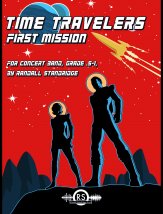
The band staff at Stanton’s is excited to announce that we have added three more composers to the Featured Composers and Arrangers section of our Concert Band Listening LibraryRoland Barrett, Rossano Galante, and Randall D. Standridge have been writing fantastic original works and arrangements for concert bands at all levels for the past several years.  Their works feature interesting and bold contemporary writing, gorgeous lyricism, and plentiful teaching opportunities, in addition to being a joy to listen to and fun to play!  We have highlighted a number of our favorite titles by each composer below, and you can click on each composer’s name to view a complete list of titles by each.

Roland Barrett
And In the End It Was Earth – Grade 4
Arabian Dances – Grade 2
Of Wizards and Warriors – Grade 2.5
Silent Stands the Elm – Grade 3
Tangents Angular – Grade 3

Rossano Galante
Cry of the Last Unicorn – Grade 4
Journey to the Lion’s Castle – Grade 5
The Redwoods – Grade 5
Resplendent Glory – Grade 5
The Winged Stallion – Grade 4

Randall D. Standridge
Adrenaline Engines – Grade 2+
Afterburn – Grade 2
Gadget – Grade 2+
The Rowan Tree – Grade 2
Steel – Grade 3

Who Will Score Star Wars Episode VII? 20 November, 2012

The announcement of Disney’s $4 billion acquisition of Lucasfilm and its subsidiaries, along with the planned 2015 release of Star Wars Episode VII set the internet and media outlets a-buzz with rumors and speculation.  From mainstream and entertainment news to fan sites and blogs about movies, comics, gaming, etc. speculation has been flying about who will write and direct Episode VII, and whether the story would be original, or adapted from the novels and comics that comprise the Star Wars expanded universe.  Of course, the immediate discussion around Stanton’s was about the return of compositional Jedi Master John Williams.

John Williams

His scores for the original trilogy and other films of that period are iconic, and a major reason the Star Wars movies are not just great, but epic.  Although less prolific than in his heyday, his recent work includes Lincoln, War Horse, and The Adventures of Tintin , and he has remained active within the Star Wars franchise, providing original music for the 2011 TV movie Lego Star Wars: The Padawan Menace.

But what if John Williams were not to return?  Williams himself admitted surprise upon returning to score the Prequel Trilogy some 20 years after the original’s debut. With whom else is The Force strong?  Although there are plenty of great film composers out there, very few could replicate his strong thematic writing and storytelling capacity without sounding like, well, a clone, not to mention finding someone whose style is appropriate to both the genre and scope of the Star Wars universe.

Howard Shore prominently returns to the limelight beginning this December with the first release from Peter Jackson’s three-film adaptation of The Hobbit.  This provides compositional consistency for Jackson’s adaptations of J.R.R. Tolkien’s mythology. Shore is probably best-known for his fantastic scores for the world-building Lord of the Rings trilogy lending credibility to his potential to create soundscapes for unexplored worlds in the Star Wars universe in addition to scoring the colorful fantasy Hugo.

Alexandre Desplat is most widely known for the darkness and grim intensity of his scores for Harry Potter and the Deathly Hallows Parts 1 & 2.  In addition to being some of this author’s favorites from the series, his Harry Potter scores display a knack for properly underscoring the gravity of epic battle.  His ability to write lighter material and strong storytelling are on display in The King’s Speech, with turns of fantasy via The Curious Case of Benjamin Button and The Golden Compass.

Alan Silvestri displayed a proven ability to score a Hollywood blockbuster with Marvel’s The Avengers, and could certainly capture the breadth and scope of Star Wars. His soundscapes and textures would be a good fit, he has the ability to compose a strong, memorable theme, see Captain America March from Captain America: The First Avenger, and his score for the modern Christmas classic, The Polar Express, is wonderful, as well.

Michael Giaccchino

Michael Giacchino appears to be the one with whom The Force is strongest, and is our pick should John Williams ever choose to pass the baton.  His versatility is on wonderful display as one of Disney/Pixar’s “go-to” composers, he is familiar to TV audiences courtesy of Lost and Fringe, and his score to 2009’s Star Trek is motion picture perfect! He has the ability to bring both strong storytelling and a visual spectacle to life at the same time, and his writing is just enough like John Williams’ to not seem like a radical departure, but not so similar as to seem like musical plagiarism.

Who would be your choice to score future Star Wars films if John Williams were unavailable?  Let us know in the comments below, and May The Force Be With You!

“Ubi Caritas” by Paul Mealor 06 November, 2012

Paul Mealor‘s setting of the Latin hymn Ubi Caritas was composed for the royal wedding of Prince William and Miss Catherine Middleton and first performed by the Choirs of Westminster Abbey and Her Majesty’s Chapel Royal, St. James’s Palace, conducted by James O’Donnell, at the wedding service at Westminster Abbey on Friday, April 29, 2011.  This much-lauded composition is now available in the U.S.!

In Mealor’s own words: “My new piece, Ubi Caritas for the Royal Wedding, takes its text from the sixth century Christian hymn that was normally sung at the service for the washing of the feet on Maundy Thursday. The words, originally in Latin, mean: ‘Where charity and love are, God is there. Let us come together in God’s love and let us love each other with a sincere heart.’

The meaning of the words, in my mind, is two-fold: firstly, a prayer about love and, secondly, about service. After all, Jesus came to serve, and the young couple are about to enter a long period of service to the nation. I wanted to capture these two themes in my piece.

The composition is for choir and is gentle, delicate and meditative. The ancient, sixth century plainchant of Ubi Caritas is blended with 21st century harmony to create a work that, I hope, is both new and reflective of the past.

This commission came as a complete surprise to me – a letter, completely out of the blue in December saying that the royal couple had heard and enjoyed my music and wanted to include it in the ceremony – I almost fell over when I heard the news.

This is the biggest gig of any composer’s life and I am really touched that the couple have chosen me. I only hope that my work can fulfill their wish for a piece that offers meditation and quiet contemplation amongst all the pomp and celebrations.” (source: guardian.co.uk)

For more distinguished choral repertoire suggestions, please contact us.

“Isn’t this from that movie?…” 29 October, 2012

Looking at music from perhaps a different angle, it becomes apparent that the most popular “classical” music written today is not necessarily the abstract and atonal offerings of recent college graduating composition majors, but instead, orchestral renderings that are heard by a large portion of the American public – namely film scores.  Look at the huge popularity of music from the Harry Potter, Lord of the Rings and Pirates of the Caribbean films – and the fact that they are scored for symphony orchestras by such luminaries as John Williams, Howard Shore, Klaus Badelt, Hans Zimmer and Danny Elfman.

With that in mind, a lot of today’s educational string writers have taken to writing music for school orchestras that could be the soundtrack to some imaginary movie.  Programmatic in nature, and often with picturesque titles that bring a visual image immediately to mind, they are some of the greatest original pieces for string orchestra being written today.  Here are some of the newest and best offerings of this genre:

Elementary String Orchestra-
Storm Chaser – Kevin Mixon – Grade 1
Aspen Glow – Susan H. Day – Grade 1+
Harvest Moon – Larry Clark – Grade 1.5
Twilight Reverie – Lauren Bernofsky – Grade 1.5

Middle School String Orchestra-
The Voyage – George Sweet – Grade 2
Afterburn – Brian Balmages – Grade 2.5
Hyperdrive – Ralph Ford – Grade 2.5
In a French Garden – Richard Meyer – Grade 2.5

High School String Orchestra-
As Twilight Falls – Robert Sheldon – Grade 3
A Wisconsin Tableau – Carrie Lane Gruselle – Grade 3
Dotonbori Dash – Alan Lee Silva – Grade 4
Orange Moon – Yukiko Nishamura – Grade 4

Aaron Copland – American Masterpieces: Choral Music 23 October, 2012

The National Endowment for the ArtsAmerican Masterpieces: Choral Music initiative is designed to celebrate our national musical heritage by highlighting significant American choral composers and their works of the past 250 years.  Stanton’s Sheet Music is proud to present this series highlighting the composers and their works featured in this groundbreaking project.

(from NEA.gov)
Aaron Copland (1900-1990) was not the only great American classical composer in the 20th century. There were dozens of others, as Copland himself emphatically proclaimed. But quite early in his career Copland became known as “the dean of American composers,” and there was no one who subsequently fit the description more neatly.

Born in the first year of the century, his life spanned nine productive decades. He not only wrote his own music, he worked tirelessly to promote the music of his fellow composers. Copland was the first American composer to be internationally recognized as creating musical works that were both distinctively American and unquestionably of lasting merit.

Written in 1954, his opera The Tender Land stands as the culminating masterpiece of his “Americana” period of composition, ca. 1935-1955. “Stomp Your Foot,” a choral square dance from the second act, is considered one of the most rousing moments in American opera.

Originally composed for solo voice and piano, Old American Songs consists of ten settings of minstrel and religious songs from the 19th century. Copland later transcribed them for voice and orchestra. Other composers, notably Irving Fine, have arranged most of them for chorus in various voicings.

Also significant in Copland’s choral canon are his Four Motets (“Help Us, O Lord,” “Sing Ye Praises to Our King,” “Have Mercy on Us, O My Lord,” and “Thou, O Jehovah, Abideth Forever”) for mixed voices, The Lark for baritone solo and mixed chorus, and In the Beginning, a jazz-tinged work for unaccompanied chorus and mezzo-soprano “narrator” describing the seven days of creation from the Bible.

Selected Works:
At the River
Four Motets
In the Beginning
The Lark
The Promise of Living
Stomp Your Foot
Simple Gifts
Zion’s Walls

For more distinguished choral repertoire suggestions, please contact us.

John Cage, Composer 22 October, 2012

John Cage was a 20th century avant-garde composer whose inventive compositions and unorthodox ideas profoundly influenced mid-20th century music.  One composition, called 4’33″, is a famous (or infamous, depending on who you’re talking to,) piece.

Newly back in print from Peters Publishing, this composition is in facsimile edition.  There is a story about the piece, and a letter John Cage wrote to a friend about the piece included in the manuscript.  If you would like to know more about this music,  other John Cage music, or other 20th century piano music, please call us at 1-800-42-MUSIC,  or email us at keyboard@stantons.com.

Erik Satie 01 October, 2012

The best known compositions by Erik Satie are the Gymnopedies 1-3.  The Gnossiennes are perhaps the second best known of his compositions.  However, he was a prolific composer, and there are  more compositions by him.  Others include a ballet called ”Parade”,  “Sports et Divertissents”, “Ogives”, both for piano solo, The Dreamy Fish, and more.  Stanton’s offers a book of sheet music by Satie that includes some piano music that does not seem to be very well known,  ”Erik Satie, 24 Pieces forPiano“, Volume 2.  It is well worth a look.  You may find some new pieces for your next recital.  So investigate and enjoy!  For more piano music, or to ask questions about Satie’s music, please call 1-800-42-MUSIC, or email us at keyboard@stantons.com.

Aaron Jay Kernis – American Masterpieces: Choral Music 24 September, 2012

The National Endowment for the ArtsAmerican Masterpieces: Choral Music initiative is designed to celebrate our national musical heritage by highlighting significant American choral composers and their works of the past 250 years.  Stanton’s Sheet Music is proud to present this series highlighting the composers and their works featured in this groundbreaking project.

(from NEA.gov)
A native of Philadelphia, Aaron Jay Kernis (born 1960) is one of today’s most-performed living composers. His music is noted for its exuberant eclecticism, expressive lyricism, and engaging wit. He was one of the youngest composers ever to be awarded the Pulitzer Prize for music (for his String Quartet No. 2).

From his very first works in the early 1980s he has unapologetically mixed every genre – from pop and jazz to classical, from medieval Church music to Jewish cantillation – into his works, with a primary objective of communicating with everyday people.

Kernis decided at the age of 13 to become a composer, after learning violin and then teaching himself piano. He studied at Manhattan School of Music, the San Francisco Conservatory of Music, and Yale University. Among his instructors in composition were John Adams, Charles Wuorinen, Jacob Druckman, and Morton Subotnick. He currently serves as New Music Advisor to the Minnesota Orchestra and teaches composition at Yale University. Liveliness and vivid color are qualities constantly remarked about his earlier works, which seemed imbued with the sheer joy of music-making. Newer works have often been more somber. His inspirations have ranged from salsa dancing to the Persian Gulf War.

A number of choral works have attracted favorable notice. Ecstatic Meditations sets words of the medieval mystic Mechthild of Magdeburg. Stein Times Seven was his 1980 choral tribute to poet Gertrude Stein. His most ambitious choral work to date is Garden of Light, commissioned by the Disney Company for the third millennium celebrations. More recently, Two Meditations, written for the Cincinnati Vocal Arts Ensemble, is a setting of two psalms that speak to the acceptance of death and the loving presence of God.

Selected Works:
Dorma, Ador
Music Is a Gift
Stein Times Seven
Teach Me Thy Way, O Lord
Two Meditations

For more distinguished choral repertoire suggestions, please contact us.