News & Views Saturday, May 25, 2013

Category: Folk Music

Autoharpin’ 17 May, 2013

In 1881, Charles Zimmerman invented the Autoharp.  In the 1960′s, Rhythm Band began to import Chromaharps from Japan.  They are much the same instrument.  Both have 36 strings and buttons on bars to press down, each bar pressed down produces a different chord.  Elementary music teachers nearly always have one or the other in the instrument cabinet in the classroom.  Much more can be done with an Autoharp or Chromaharp than simple strumming.  Fancier strums can be employed, and there is a way to do some picking. Folksingers often include an Autoharp in their collection of  instruments they use to accompany themselves. Mother Maybelle Carter is one of the best known autoharp players. It’s a much more versatile instrument than many people realize.  Mel Bay’s Complete Method for Autoharp or Chromaharp has 48 lessons teaching everything from learning to read music and tuning to advanced strumming.  This book of sheet music for Autoharp was written by Meg Peterson, and includes a CD.  For more information about this or other Autoharp music, please call us at 1-800-42-MUSIC, email us at keyboard@stantons.com, or visit our website at http://www.stantons.com. Shop Stanton’s for all your sheet music needs!

First Lessons Dulcimer 14 May, 2013

Have you recently acquired a lap dulcimer, and now want to know what to do with it?   It’s not too hard to learn: there are a lot of helpful books, DVDs and CDs available!

Joyce Ochs has written a helpful method book for the dulcimer in DAD tuning.  First Lessons Dulcimer  includes a CD that will help you tune your dulcimer and what the songs are supposed to sound like. All the basics are here. Basic chords and strums are taught, and beginning melody picking is introduced.

When you are comfortable with your dulcimer,  Stanton’s has a selection of more dulcimer books to choose from. There are dulcimer hymns and books of folk songs for dulcimer.  For more dulcimer music, call us at 1-800-42-MUSIC, email us at keyboard@stantons.com, or visit our website at http://www.stantons.com.  Shop Stanton’s for all your sheet music needs!

Deluxe Accordion Method 06 May, 2013

Not so long ago, a customer remarked to me that the accordion was “coming back” (into favor).  Momentarily, I was puzzled. For me, as a member of the folk music/dance community, the accordion never “went away!”

How do today’s players learn to play? One very helpful resource is Mel Bay’s Deluxe Accordion Method, written by Frank Zucco. How to read music , rhythms,  how to use the bass keys, and how to best control the bellows are all taught in a book that is easy to understand. Although written for children, this instruction book is easily used by adults, also. In addition, there are other books of sheet music for accordion.  There are collections of pop tunes, polkas,  international dance tunes, Irish songs, and other ethnic collections.

If you are dusting off your old accordion, or you are aspiring to become an accordionist, we have a good selection of methods and sheet music books for you! For more information about accordion music, please call us at 1-800-42-MUSIC, email us at keyboard@stantons.com, or check out our website at http://www.stantons.com. Shop Stanton’s for all your sheet music needs.

The Nashville Number System 29 April, 2013

What is the Nashville Number System?   It is probably the easiest, fastest method to transpose keys for people who play chords.  For session players and jammers, it is the way to change keys instantly.  Duck’s Deluxe explains and illustrates the Nashville Number System with a dial that shows the guitar chords and basic progressions.  If you don’t play guitar, it doesn’t matter.  All you have to do is use the chords for your own instrument and follow the chord progressions.  This dial is indispensable for learning the Nashville number system.  It’s a great time saver for those who work with vocalists, and need to change keys on the spot! For more information about this or other helpful guides for playing guitar, call us at 1-800-42-MUSIC, write us at keyboard@stantons.com, or check out our website at www.stantons.com.  Shop Stanton’s for all your sheet music needs.

Fiddle from Scratch 01 April, 2013

Dan Levenson is a Southern Appalachian native who has grown up with the music of that region.  He is a master teacher and performer on both fiddle and clawhammer banjo.  In “Fiddle from Scratch“, Dan begins at the very beginning: how to tune , how to hold the fiddle, how to use the bow.  Real fiddle tunes are used to teach, including “Spotted Pony”,  ”Arkansas Traveler”, “Soldier’s Joy”, and more.   Two CDs are included.  They include slow and normal speed recordings for all the exercises and fiddle tunes.  A lot of information and music is presented in a fun and understandable manner. There is a section on jam session etiquette that will be very helpful once you feel confident enough to play in a group.  If you want to learn fiddle or if you want to learn more about how to play, this is a great book.   For more information on this fiddle book or others, please contact us at 1-800-42-MUSIC, email us at keyboard@stantons.com, or visit our website, www.stantons.com. Shop Stanton’s for all your sheet music needs.

It’s Spring! 29 March, 2013

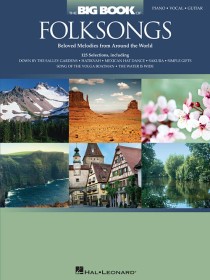
00312549Spring has sprung, the grass is riz, I wonder where them flowers iz!  Are you one of those people whose green thumbs are itching for the soil, already?  Is John Denver’s “The Garden Song” already ringing in your head, but you can’t quite remember all the words?   That song is in the John Denver Anthology, along with 53 other great John Denver songs.  If you are in the mood for spring songs, how about The Big Book of Folk Songs?  “Sakura (Cherry Blossoms)”,” And the Green Grass Grows All Around”,  “Country Gardens”, and more are in this collection of sheet music.  There are the Beatles songs, “Here Comes the Sun”  and “Good Day Sunshine”, both in a book called Beatles Ballads.  New music always makes people happy.  So does singing old favorites you’d forgotten about. For more information about these collections or others, please contact us at 1-800-42-MUSIC, email us at keyboard@stantons.com, or check out our website, www.stantons.com. Shop Stanton’s for all your sheet music needs.

The Bluegrass Songbook 28 March, 2013

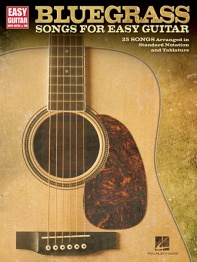
The Bluegrass Songbook is full of 51 classic Bluegrass songs, from “The Ballad of Jed Clampett” (Beverly Hillbillies theme),00312317 to “The Wabash Cannonball“.  The words, piano part, and guitar chords are all there for each song in this book of sheet music. The lovely song, “The Long Black Veil”  is included, as is the encouraging song “Keep On the Sunny Side“.   This is  a great songbook for a singalong or jam session. For more information about this collection of Bluegrass songs or others, please contact us at 1-800-42-MUSIC, email us at keyboard@stantons.com, or visit our website.  Shop Stanton’s for all your sheet music needs!

Happy Saint Patrick’s Day! 01 March, 2013

leon-00311322-fAs musicians, we get started early.  So March first isn’t too early to get ready for Saint Patrick’s Day on the 17th.  One book we have to offer is for easy piano, “Ireland’s Best Loved Songs and Ballads“.  It has twenty Irish songs in it, including the perrenial favorite  ”Danny Boy”.  A book in piano/vocal/guitar format is  ”Irish Ballads“, fifty-five songs including “Danny Boy”, “Carrickfergus”,  and   “The Minstrel Boy” .  “The Irish Songbook“  is a collection of seventy-five songs, collected and made popular by The Clancy Brothers and Tommy Makem, a well-known Irish band.  It includes the lovely  song “Eileen Aroon”, the silly song “Mr. Moses Ri-Tooral-i-ay” , the sailor’s song  ”Paddy Doyle’s Boots” , the war  protest song “The Lowlands of Holland”, love songs, and many more.  For more information on these Irish song books or other songbooks you may be interested in, call 1-800-42-MUSIC, email us at keyboard@stantons.com, or visit our website at www.stantons.com

Music from the East for Young Band 25 February, 2013

As we were previewing this year’s new concert band arrangements, we were struck by several really good, new arrangements for young band based on Asian folk melodies and styles.  Drawing on traditional Chinese and Japanese folk tunes, as well as original work featuring Eastern-influenced tonality, these pieces are wonderfully authentic and interesting to play.  They provide excellent programming variety, will broaden your students’ musical experience (especially in developing their ears), and create fantastic multi-cultural educational opportunities – a joint lesson in Asian geography and world history would be perfect!

On our recommendation, one of our regular Ohio teachers programmed the Chinese Folk Fantasy.  He was somewhat concerned about authenticity and how it would be received by his Chinese-American families.  They loved it, so it comes recommended with first-hand classroom and concert experience!  Likewise, your students will enjoy the rhythmic qualities of Ryukyu Bushi, the sonic similarities between Reflections of Asia and wind band standard Variations on a Korean Folk Song, and the taiko drums in Japanese Pictures will just be a blast!

Chinese Folk Fantasy
arr. James Curnow
Grade 2
If you’re looking for an alternative programming option, look no further! Combining three traditional Chinese folk melodies, Chinese Folk Fantasy is full of characteristic sounds and rhythms. There is a good deal of 8th note rhythmic doubling and the pointed rhythmic patterns and Eastern tonality will peak your audience’s interest and challenge your students – this one will stretch their ears and increase their harmonic independence.

Japanese Pictures
Kevin Mixon
Grade 2
Bold and exciting, this characteristic work draws inspiration from both traditional and modern Japanese music, and features taiko drums! Plenty of rhythmic punch contrasts with legato phrases, traditional-sounding pentatonic counterlines, and some western harmonies in this enjoyable, multi-cultural work.

Reflections of Asia
Todd Phillips
Grade 2.5
Featuring a charming, simple pentatonic melody that passes around the ensemble, varied articulation, and excellent percussion writing that incorporates common auxiliary instruments, Todd Phillips has created a pleasant, folk-type original work evocative of Variations on a Korean Folk Song sans variations. This is a great choice for developing student ears and technique, as well as light playing style.

Ryukyu Bushi
Patrick J. Burns
Grade 1
Ryukyu Bushi is based on a Japanese folk melody from the Ryukyu Islands where the martial art of karate originated. This dramatic little tune appears throughout the piece, sometimes accompanied by clapping, sometimes by tenor drum, triangle, tambourine, and cymbal. Your young players will enjoy playing this exciting little piece as much as they’ll like saying its title.

The “Other Woodwinds” Part Three 11 February, 2013

melbay-95361-fPart one of The “Other Woodwinds” discussed the recorder, and Part two discussed the Native American flute.  Part  three  discusses the “tinwhistle“, also called a “pennywhistle”.  It’s called a “tin” whistle because it’s traditionally made of tin rolled into a tube and finished as a musical instrument.  It’s called a “penny” whistle because the street urchins and itinerant performers used to charge a penny to play a tune.    Mel Bay’s “You Can Teach Yourself Tinwhistle“  can get you started with your new tinwhistle. This book of 8o pages can teach you to read music, how to play the notes on the whistle, and it gives you songs to play. Stanton’s also sells tinwhistles- The Original Clarke Penny Whistle in the key of D.  Once you get the hang of your pennywhistle, there is a book of Irish tunes to play called Mel Bay’s Deluxe Tinwhistle Songbook.  It has guitar chords written in so you can have  a friend play along with you.  Get ready for St. Patrick’s Day, or just get the book for fun.  For more information about tinwhistle music or Irish music for Saint Patrick’s Day, please call us at 1-800-42-MUSIC, email us at keyboard@stantons.com, or visit our website at www.stantons.com.

The “Other Woodwinds”, Part Two 08 February, 2013

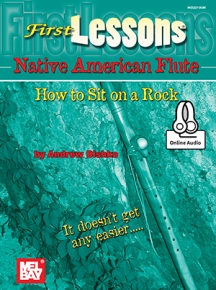
melbay-96718-fWoodwinds aren’t just flute, clarinet and saxophone.  They can be recorder, Native American flute, or tinwhistle.  Part One investigated the recorder.  Part Two will address the Native American flute.  There is some music printed for this instrument.  Until recently, (the early 1970′s), the Native American flute has been a little-known instrument.  This is because, “in the years of official suppression of native culture, the use of the flute was lost by many tribes and continued as a small part of the tribal culture in which it remained.”  (R. Carlos Nakai, page 2 in “The Art of the Native American Flute“.)  Now there are many makers of fine Native flutes, and people want to find music to play.  Native flutes are built in keys, and their range is one or two notes more than an octave.  It’s not unusual for a person who plays often to have several flutes, each in a different key.  The sweet, pure sound of the Native flute is pleasing and calming.  If you have one, or would like to get one, and you need to know how to start playing it, “The Art of the Native American Flute” by R. Carlos Nakai is a great book to begin with.  It explains Native musical traditions, tunings and finger patterns, the Nakai tab system and more, followed by transcriptions of 18 flute compositions by Carlos Nakai from several of his recordings.

A second book of Native flute songs is “Songs of the Nations” by Jim Mayhew.  It uses the Nakai tab system to notate songs from many tribes collected by Frances Densmore for the Smithsonian Institute’s Bureau of American Ethnology.  Her method of recording was the newly-invented  Edison Recorder.  Natives called it a “speaking box”.  Because of the “speaking box” and Frances Densmore, we can still sing and play these songs today, more than 100 years after they were first recorded.songs-of-the-nations  If you are interested in these books, or other folk instrument publications, please contact us at 1-800-42-MUSIC, email us at keyboard@stantons.com, or check out our website at www.stantons.com

Fantastic Folk Song Settings for Concert Band 06 February, 2013

Folk songs have provided the basis for many classical compositions for centuries, a tradition that has carried over into the wind band world.  From settings by Percy Grainger, to the Holst Suites and Grundman Rhapsodies, folk song settings have become staples of band repertoire in individual arrangements, medleys, and original compositions.  There are a half-dozen good new arrangements and compositions incorporating folk songs for concert band this year running the gamut from a beautiful new setting of Shenandoah to the traditional Jewish Hava Nagila – be sure to check them out below!  For more information and analysis of folk song use in standard wind band repertoire check out the Catalog of Folk Song Settings for Wind Band.

Down in the Valley
arr. Pierre La Plante      Grade 3                        $76.00
The most well-known and beloved American mountain ballad in a beautiful, sensitive setting by master folksong tunesmith-arranger, Pierre LaPlante.

Hava Nagila
arr. David Bobrowitz     Grade 3                        $50.00
The excitement builds with the tempo in this wonderfully authentic arrangement of the traditional Hebrew song. Opening with a solo group consisting of flute, saxophone, euphonium, and bells, the unfolding musical tide gains momentum with each section, right through the boisterous, celebratory ending.

Poor Wayfaring Stranger
arr. Andrew Boysen, Jr.            Grade 4                        $70.00
The opening movement of Three Folk Song Settings for Band, “Poor Wayfaring Stranger,” is a dramatic and dark presentation of the well-known song.  Each movement opens with a similar motive of a rising fifth followed by a descending second.  This unifying motive is used both harmonically and melodically in each of the three movements and sets the foundation for the entire suite.

Saddle Up
arr. Clifton J. Jones       Grade 4                        $80.00
Check out this lively mix of traditional songs from the American West, colorfully scored for concert band including Red River Valley, a unique, bluesy setting of The Yellow Rose of Texas, a jaunty Whoopee Ti-Yi-Yo, and caps off with a bright, boot-scootin’ Cotton Eyed-Joe.

Shenandoah
arr. Julian Bond             Grade 3                        $68.00
Julian Bond’s rich arrangement of this popular traditional American melody is aimed at developing a warm ensemble sound and expressive phrasing. The palette of colors changes throughout to allow each section to shine as the melodic responsibilities are passed around the ensemble. The piece ebbs and flows from subtle splashes of light to dramatic presentations of melody creating an overall effect that is contemporary and picturesque.

Within the Castle Walls
arr. Brian Balmages      Grade 3                        $80.00
Wielding these courageous Welsh folksongs, a portrait emerges of the many faces of war — bravery in battle, loneliness & longing, pride & national spirit — an inspiring, emotionally-charged and richly varied suite reminiscent of Grainger.

Auld Lang Syne 11 December, 2012

The song “Auld Lang Syne” comes from Scotland. The song is very old, collected by Robert Burns – by his own account – though some of the poem may well have been composed by him. The words “auld lang syne” translate rougly to “long, long ago,” and “for auld lang syne” means “for the sake of old times.”

Do you think you know the words?  Are you sure?  Stanton’s has the sheet music for this song. It is also included in several Christmas books of sheet music: Holiday Hits, Ultimate Christmas, and Essential Songs Christmas.

Guitar(s) for Christmas 07 December, 2012

Fingerpicking Christmas”  is a collection of 20 carols arranged for solo guitar.  The songs are written in standard notation and in tablature. If you play classical guitar or fingerpicking style, this is a good intermediate collection.  If you play your guitar for church, these pieces would be perfect for the offertory-just play 2 in a row.  This is a collection worth returning to every year!

  “Christmas Classics” is a collection of 15 Christmas songs for 3 or more guitarists.  Written at the mid-beginner level, these songs are each 2 pages long, so they are quick to prepare.   The players need to read music.  If you play guitar and have 2 more guitarist friends, take advantage of this collection in time for the Christmas season!  Other guitar ensemble music collections are  in the Essential Elements Guitar Ensembles line from Hal Leonard.

For information about these books of Christmas sheet music or other guitar books, please call us at 1-800-42-MUSIC or email us at keyboard@stantons.com.

Ukulele for Christmas 23 November, 2012

We have seen ukulele for ACDC,  Metallica, and Jimi Hendrix.  Let us turn to something well, not as ramped-up.  How about ukulele for Christmas?  Why not?  The ukulele is small,  portable, easy to play, a very friendly little instrument.

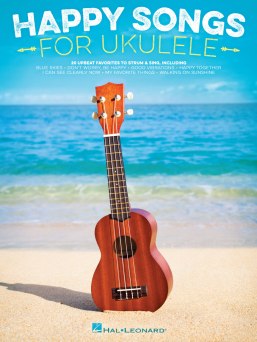
Christmas Songs for Ukulele“  contains 20 easy arrangements of favorite holiday songs including “Rockin’ Around the Christmas Tree”,  “Frosty the Snowman” and “A Holly Jolly Christmas”.  Melody, words, and chord grids are included for each song.  Be the song leader for a sing-along.  Strum your best, and get your friends into the holiday mood!  For more information about this book of Christmas sheet music, or other ukulele books, call us at 1-800-42-MUSIC or email us at keyboard@stantons.com.

We Wish You a Folky Christmas! 13 November, 2012

Books of Christmas music for folk instruments are sometimes hard to come by.  Here are two books, one for banjo and one for mandolin.  “Christmas Songs for Banjo” has been arranged by Jim Schustedt.  The music is written out in both banjo tablature and standard notation, and includes chord names and lyrics. Because the chord names are included, friends can strum along, turning your visit  into a fun get-together. Contents include  24 songs, mostly standard Christmas carols.  There is a handy banjo notation legend in the back of the book.

  “Mandolin Christmas” by Eric Cutshall is a collection of  20 Christmas carols, each in 2 versions. First, a lead sheet version, second, a solo arrangement.  They can be played together as duets, and chord names  are included, so friends can strum along.  Spend the holiday with friends and make music together with either collection!  For information concerning either of these Christmas books, or other folk music Christmas collections, please call 1-800-42-MUSIC or email us at keyboard@stantons.com.

50 Christmas Carols for All Harps, by Sylvia Woods 08 November, 2012

50 Christmas Carols for All Harps , by Sylvia Woods, is one of her multi-level harp collections.  The book is written for lever harp, but can be played on pedal harp as well.  Each tune has 2 pages.  One page is easy, the next page is more advanced.  These two arrangements can also  be played together as a duet for harps. There are chord names for chorded instruments, so a guitar could strum along.  Christmas music for harp is not very easy to find, so this is a great collection to have. The pieces can be prepared quickly.  The lyrics are included for those inclined to sing along.  For more information about this harp collection of sheet music or other collections, please contact us at 1-800-42-MUSIC or email us at keyboard@stantons.com.

A Fiddling Christmas, by Craig Duncan 05 November, 2012

What’s more fun than playing Christmas carols on the violin?  Playing more Christmas carols on the violin, of course!  “A Fiddling Christmas“,collected by Craig Duncan, from Mel Bay Publications, has 73 Christmas songs.  These songs come from all over.  “Angels We Have Heard on High” was a French carol first published in 1842.  “Away in a Manger” has two tunes: the Kirkpatrick tune was first published in Cincinatti, Ohio.  “The Cherry Tree Carol” has been sung in England since at least the 17th century.  “Christmas Eve” is a fiddle tune from the Appalachians, heard beginning in the 1920′s.  “Oh Christmas Tree” came from Germany.    “Infant Holy, Infant Lowly” hails from Poland.  A lively fiddle tune called “Frost and Snow” comes from Ireland.  The tunes are not long, only 2-4 lines each.  There is a piano accompaniment book included with the fiddle book.  A second violin part is provided for each tune, so violin duets are a possibilty with this collection.  If there is no pianist available, chords are provided above the staff.  A guitarist can strum along, or a mandolin player.  Some songs have few enough chords that an autoharp player can play along.  This book is great for get-togethers, Christmas party background music, or  just plain fun.  To inquire about this book of sheet music for fiddle, or other fiddle music, cotact us at 1-800-42-MUSIC or  email us at www.stantons.com

Happy Birthday Papa John! 30 August, 2012

John Edmund Andrew Phillips was born this day, August 30, 1935.  Known as Papa John, he was a member and leader of the the singing group, The Mamas and the Papas, who had many hits in the mid 1960s, written primarily by John and his wife, Michelle, who was one of the Mamas.  Their hits include “California Dreamin’,” “Monday, Monday,” “I Saw Her Again,” “Words of Love” and “Creeque Alley.”  The group was inducted into the Rock and Roll Hall of Fame on January 12, 1998.

John was also instrumental in creating, promoting and playing at the very first rock festival, The Monterey International Pop Music Festival, in June, 1967, which was developed as a way to validate rock music as an art form in the way jazz and folk were regarded.  It was undoubtedly an inspiration for the famous Woodstock Festival, held two years later in 1969.

John was good friends with Scott McKenzie, who died on August 18 of this year, ironically less than two weeks before the anniversary of John’s birthday.  Scott was a “one hit wonder” whose claim to fame was a song called “San Francisco (Be Sure to Wear Flowers in Your Hair).”  John Phillips actually wrote the song for Scott and played guitar on the recording.

After the original Mamas and Papas broke up, John and Scott reformed the group for a while in 1986 with Mike Love, of the Beach Boys, and Terry Melcher.  Together they wrote the song Kokomo, which ended up being a hit for The Beach Boys.

Carnie and Wendy Wilson, daughters of Beach Boy, Brian Wilson, and Chynna Phillips, daughter of John and Michelle Phillips formed a group called Wilson Phillips that had several hits in the early 90s, including “Hold On,” “Release Me,” “Impulsive” and “You’re In Love.”  They were featured, as themselves, in the hilarious 2011 film, Bridesmaids.

After his success with The Mamas and The Papas, John continued in many musical activities in America and England as both a solo artist and behind the scenes on many projects. He also lived the high life.  After years of drug and alcohol abuse, rehab, four marriages and various high profile scandals, he died on March 18, 2001, just days after completing sessions for a new album, Phillips 66, which was released posthumously in August, 2001.

Source: Wikipedia

It’s Not “Just” a Harmonica! 29 August, 2012

The harmonica.  In the bottom of nearly every child’s toy chest, there is a battered harmonica.  It is likely not useable any more, as the harmonica is a “consumable” instrument;  that is, it can be worn out and is not able to be repaired.  Developed in the early 19th century, the harmonica is in the “free reed” family of instruments.  Each pitch is produced by blowing across a small brass reed.  The harmonica is used in many kinds of music: folk, popular, jazz, rock ‘n’ roll…. Famous harmonica players include Bob Dylan, who played harmonica for “Mr. Tambourine Man”,  Billy Joel, who played  for “Piano Man”, and John Lennon, who played for “Love Me Do”.

Stanton’s has lots of sheet music books for harmonica.  Some are songs for fun, like the Music Pocketbook Songbook, or “The Backpacker’s Songbook”.  Others teach how to play the harmonica.  There is a great video called “Play Harmonica Today” that is very helpful.  We sell a basic 10 hole harmonica in “C” for $8.50.  We also sell a 4 hole harmonica in “C”.  It plays one octave, has no instruction, but is not hard to figure out once you get going on the 10 hole harmonica.  There are lots of kinds of harmonicas, too.  Many pulmonary rehabilitation programs have begun to incorporate the harmonica as a means to develop a strong diaphragm and deep breathing.  And some folks think it’s a mere toy.